

Exciting new programme with COSRT therapists starting on Friday 26thApril on BBC3 and BBC1
Sex on the Couch is a six-part series offering a unique insight into modern relationships and the pressures they face by following real-life couples as they bring their sexual and emotional issues to a specially constructed clinic. With the support of a team of four experienced therapists, the couples will try to solve their problematic sex lives, discovering that to do this often means dealing with issues at the heart of their relationships.
The COSRT Therapists involved in the series are:-
Kate Moyle is a COSRT-accredited psychosexual and relationship therapist based in London. Kate is a member of the COSRT Media Team. She mostly works with couples in their 20’s and 30’s struggling with difficulties in their sex lives and sexuality. Ultimately, her aim is to help people get to a place of sexual health, happiness and wellbeing, in order that they can make the informed decisions that are best for them and feel comfortable in their sexuality. Alongside her work as a therapist, she is UK Sex Expert for Luxury sex toy brand Lelo, and co-founded the therapy practice The Thought House Partnership in Central London
Silva Neves is a psychosexual and relationship therapist based in London. He is very experienced with all aspects of sex and relationship therapy, having worked for many years in private practice. He is an accredited member of COSRT.
Lohani Noor is an experienced empathic and relational psychotherapist based in Manchester. Lohani has worked in private practice for many years. She is undertaking an MSC in Psychosexual Therapies and is a member of COSRT.
Across three highly-charged sessions, the couples reveal their most intimate secrets, share their fears, face up to difficult truths and make vital breakthroughs together, experiencing laughter and tears along the way. Away from the clinic they’ll be given exercises to try at home as they try to revitalise their relationship or face a crunch point. Can they turn a corner? Or is it time to go their separate ways? Surprising, shocking and uplifting, this series is packed with compelling couples whose stories parallel the experiences of young people in Britain today.
We spoke with the COSRT Therapists about their practices and their decision to take part in the programme:-
Kate Moyle
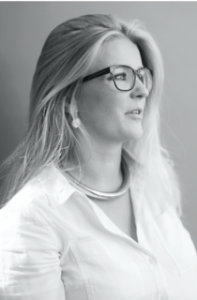 “I have a private Psychosexual & Relationship Therapy practice in Oxford Circus ( www.katemoyle.co.uk ) and also Co-Founded The Thought House Partnership on Mortimer Street ( www.thethoughthouse.co.uk ) which is a therapy practice with a team of 12 therapists with a mix of specialities including Psychosexual & Relationship Therapy. My practice is mostly Psychosexual Therapy clients who are busy professionals working in and around central London who feel that their difficulties and anxieties with sex are holding them back in some way and impacting their mental health and wellbeing. I also work with a lot younger couples in their twenties and thirties around managing and juggling their relationships in busy modern lives and making space for sex and intimacy, and importantly communication.”
“It wasn’t an easy decision to take part in the programme and was part of an ongoing conversation over a few months between the producers, a few trusted peers, my supervisor, and the COSRT Media Team. The show felt like it couldn’t be more relevant to what we do in our daily and professional lives and was being produced with the facts of working with couples and helping them to talk about sex and relationships at the forefront of the agenda. One of the development producers for BBC Studios also had a strong personal connection with Psychosexual Therapy as a career which meant that it was being sensitively produced.
The problem that so many of the people coming through the doors of my practice seem to struggle with is the invisibility of sexual difficulties and problems and how they feel that they are so alone in their feelings and experiences and the show should help to shatter that illusion that we as psychosexual therapists know is not true, but also to push the conversation about sexual and relationship difficulties into the mainstream.”
“The ‘millenial’ generation particularly struggle with the idea of perfectionism and constantly comparing themselves to others through online sources such as social media, and this can really impact sex and sexual confidence; and so it could be so useful for people to see and hear what real sex lives and relationships are like from people that they can easily relate to, and how something like therapy can be helpful. We still struggle with the inconsistency in open, honest and realistic conversations about sex and sexuality and a lack of sex education; with the flip side of idealised sex and bodies in advertising, and on films and tv, and the obvious influence of online pornography in viewers perspectives on sex. It felt important to be involved with a project which goes against this in hosting and showing the realistic conversations, and highs and lows that everyday sex lives and relationships entail. It also highlights psychosexual and relationship therapy as something helpful and normalising as a way of dealing with relationship difficulties, and also that your relationship doesn’t have to be at rock bottom in order to seek help which is the common held perspective for so many.”
Silva Neves
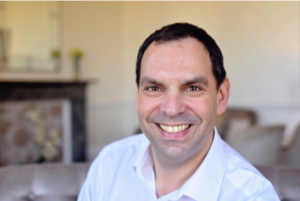 “I work in my private practice in two Central London locations: in the City (EC1) and Wimpole Street (W1) (http://www.silvaneves.co.uk/). I also provide clinical supervision. I see individuals and couples who struggle with their sex lives and their relationships. I specialise in sexual trauma, compulsive sexual behaviours, healing after infidelity, working with the LGBTQ community, I see couples who have difficulties with their different sex drives and find it difficult to be sexual with each other. And I see couples who have frequent conflicts. Quite a range! I decided to take part in the programme because I’m passionate about informing the public about sexual and relationship health. I think it is important to demystify sex therapy and to make it less daunting for the public, especially given that most people will have sexual and relationship problems at some point in their lives. Normalising sex therapy and making it accessible for the general public is crucial.”
“I think the programme is important because it is rare to have a show that reveals what really goes on in a sex therapy consulting room, with real sex therapists and real couples. Most people will be able to relate to the couples who were courageous to take part in the programme. It will normalise the most common sexual and relationship issues. I think it can really help many people out there reflecting on their own sex life and relationships and they might even decide to do for themselves some of the homework that were suggested to the couples on the programme. It can be a gentle introduction to proper sex therapy to the public and maybe encourage them to seek an appropriate COSRT professional. The public will be able to learn accurate information about sex and relationship, which is always valuable given that there is so much misleading information out there on these topics.”
Lohani Noor
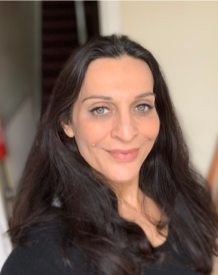 “I have a residency at The Manchester Institute for Psychotherapy, Chorlton, Manchester, www.mcpt.co.uk. However I also practise from the Remedy Lounge in Manchester City Centre. My business name is ’Talk to Lohani’, talktolohani@gmail.com, and I am a psychotherapist in private practice. I normally see the “unhappy well”, that is people who are able to cathect enough of their adult process to facilitate reflection. I see a lot of couples and also run a therapy group, which I am very proud of. However the majority of my client base is made up of individual therapy. I have a broad spectrum of clients, which I like. I do however see a number of clients who bring sexual confusion, criminality, dysfunction and trauma as part of their therapy narrative. I am currently undertaking a MSc in Psychosexual Therapies. I do not wish to limit my work to the domain of psychosexual but I am very interested in embedding psychosexual into my daily practice. We need to find an ok way to talk about all aspects of our existence. My training was in Transactional Analysis Psychotherapy, which I love as it offers a comprehensive model of personality and treatment planning. I have expanded my studies and am very much interested in psychodynamic and psychoanalytical approaches, also i am interested in working with the fragmentation of personality which may happen as a result of trauma. I almost didn’t take part in the programme as I was concerned that the emphasis would be on titillation, which would further compound the difficulty, we as a society, have on talking about anything to do with sex. We use the same words for the experience of sex, but because there hasn’t been enough open dialogue about the meaning of those words we may find ourselves feeling or knowing something very different from others using the same words.”
“After much deliberation and lengthy chats with my supervisor, I decided that, if nothing else, I could demonstrate healthy, non-judgmental, non-shaming, open, frank and honest dialogue about sex, sexuality, sensuality, not exclusive to be intrinsically part of the human condition. I think this programme is hugely important as it signals a journey towards a greater capacity for human loving. By that I don’t just mean better sex, although better sex is certainly a consequence of a better capacity to love. My feeling is that as a society we need to recognise that our sexual ideas of ourselves are largely based on a male paradigm, and as long as it stays so sex will remain problematic. Porn, sexualised images around us, generalised sexual dialogue etc focus largely on the erection and performance of the penis, penetration and ejaculation as primary goals. With this in mind what would be really useful would be a shift from being sexual beings to becoming sensual beings. That is we take the focus away from the penis and place it firmly on the intimate experience of allowing your mind and body to connect, without barriers of fear, shame, inadequacy etc, with another. I see sexual intimacy as the fruit of intertwining trees. If the integrity of the trees is good the fruit will be plump and juicy. Needless to say if one or the other, or both (or more) trees have problems in their roots or branches the fruit will be lacking. I’m not suggesting that orgasm isn’t important, I’m suggesting the experience of orgasm can be greatly deepened and broadened if we learn to connect on a multitude of levels.”
Sex on the Couch is a BBC Studios production for BBC Three. It airs on Friday 26thApril 2019 on BBC3 and BBC1.