

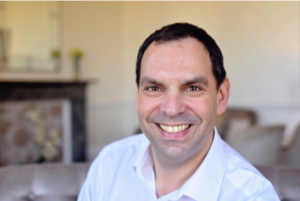
COSRT media representative Silva Neves discusses the weariness of going into Lockdown 3.
Here we are, yet again, on another national lockdown in England, the third one in eleven months. In between lockdowns, there hadn’t been much fun either, with ongoing restrictions to the life we used to have, which seems more and more of a distant past as we go on. Some of us wonder if there will ever be a ‘back to normal’. Has the pandemic changed the world we used to know permanently?
Many people lost loved ones prematurely and under terrible circumstances. Indeed, for them, life will never be the same again.
Many elderly people and those with underlying medical conditions have to shield again. Before COVID-19, we all read reports highlighting a loneliness problem with older people in the UK. Now, in COVID-19 times, loneliness has become the silent killer that will not feature in the virus death statistics.
We are relationship people, we survive and thrive in connection. Many older people are unable to use technology to see their loved ones, many will only have the contact of a care worker whose face has to be mostly hidden by a mask. These people are losing the very one thing that had been keeping them alive. The lack of long-term meaningful connection erodes mental and physical health.
We are worn out. Even the hope of a quick vaccine roll out is not enough to lift the gloom of having to endure yet another two or three months of strict restrictions. Unfortunately, there is no alternative solutions at the moment. We have truly entered an era of survival of the fittest.
In March 2020, some sex therapists, including me, have entertained the idea of an upcoming COVID Baby Boom, but what we have seen instead is quite the opposite. With much existential anxiety about life and death, so much loss of jobs and financial security, combined with the frustration of couples and children living together all the time in their home that had been feeling smaller and smaller, so much lifestyle change, so much constant bad news on the media, and the weariness of one lockdown after another, people’s sexual desires plummeted. Some have reported to sex therapists that their sex lives have become instinct. Of course, this is a usual presentation for sex therapists, but the rate in which people’s sex lives disappeared without any hint of getting it back has been a major concern for many couples.
Sex therapists have a lot of excellent expertise to help couples resolving sexual problems, but all the usual psychosexual strategies are now becoming less effective. Why is that?
The answer is simple, resolving sexual problems require one essential ingredient: energy. I say energy, not motivation. Many are motivated to change their sex lives, but if energy is lacking, motivation doesn’t translate into actions.
At this stage, I think it is important for everybody, clients and therapists, to remember that it is absolutely normal to have a lack of energy given that the weariness of national lockdowns will affect our emotional, physical and mental health, and our energy system will be depleted.
What is the answer?
How about giving ourselves the permission not to push through? How about accepting that the disappearance of sex life is normal in these difficult times? How about reminding ourselves that when we’re in survival mode, we are not in ‘horny’ mode?
Some sex therapists I supervise feel ‘useless’ because their tools don’t currently land with their clients. But as therapists, we are more than a sum of tools. If tried and tested interventions don’t currently work, it doesn’t mean they are not good, it doesn’t mean the therapist is bad, it only means that we have to adapt therapy and go back to basics: the human connection is the key element for people’s well-being. Let’s not forget that.
In psychosexual therapy, rather than giving strategies to resolve sexual problems, perhaps, now is the time to teach clients how to honour their bodies’ functions. A lack of sexual desire is the body and mind’s way to tell us that we have to focus on survival, the area of life further down on the hierarchy of human needs, the foundation that supports good sexual health: kindness and compassion to ourselves and to others. Better sleep. Good food. Moderate exercise. Breathing. Connecting with nature. Psychosexual therapy in COVID-19 times can be a space to discuss trusting our own bodies and fostering a hope that sexual desire can return when balance has been restored. In the meantime, taking the pressure off to be sexual might be the very thing that can help people’s sex lives.